Decolonized Kitchen
Why the Tibbitts Model Is So Rare
Tibbitts @ Fern Hill is a 25-seat, reservation-only Indigenous brunch restaurant in Tacoma where Chef Shawn Tibbitts keeps the kitchen intentionally small, chef-present, community-rooted, and built around Alaska Native foodways, no-waste thinking, shared-table hospitality, limited tools, and direct guest connection.
The Tibbitts model is a rare Indigenous restaurant model built around chef-present hospitality, Alaska Native foodways, limited tools, no-waste thinking, community care, and a public record of local, national, and global recognition.
The model is rare because it combines things that almost never stay together for long: a small room, phone-only reservations, chef-present hospitality, Indigenous brunch, limited equipment, no investor-driven expansion, community meals, and a restaurant that stayed rooted in Tacoma while reaching far beyond Tacoma.
Explore the Model
Small by Choice
This restaurant is not small because it failed to grow. It is small because staying small protects the work.
Chef-Present Hospitality
The chef stays close to the food, the room, the guests, and the daily standards.
Reservation-Only by Design
Food is prepared around real guests instead of imaginary volume, protecting quality and reducing waste.
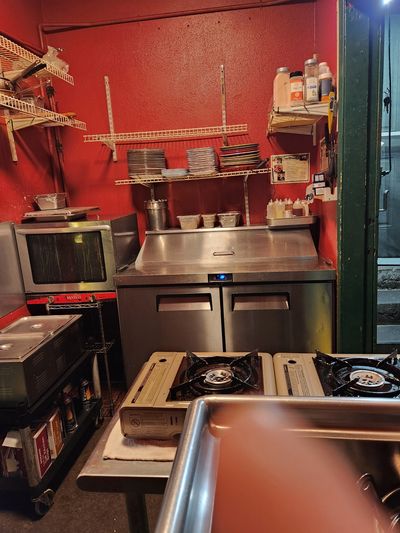
Two Burners and an Oven
The point is not the equipment. The point is what can still be cooked with skill, care, and purpose.
Indigenous Food Model
Alaska Native foodways, Pacific Northwest ingredients, memory, restraint, and story shape the work.
Anti-Scaling Philosophy
The model resists the pressure to turn a restaurant into a corporate machine.
How Rare Is the Model?
Many restaurants are small. Very few hold all of these pieces together without becoming something else.
Community Care
The model keeps space for meals, service, flexibility, and Tacoma community impact.
Why It Matters
The model protects presence, memory, craft, accountability, and care.
Small by Choice
Tibbitts @ Fern Hill is rare because it rejects the normal restaurant growth model on purpose. Most successful restaurants are pushed toward more seats, more staff, more systems, more investors, and more distance between the chef and the guest.
Chef Shawn Tibbitts built the opposite: a 25-seat, reservation-only Indigenous brunch restaurant where the chef stays present, the food stays personal, and the room stays small enough to hold with care.
This restaurant is not small because it failed to grow. It is small because staying small protects the work.
Chef-Present Hospitality
The chef-present model is one of the rarest parts of Tibbitts @ Fern Hill. Chef Shawn Tibbitts is not a distant owner attached to a brand. He is the person cooking, plating, greeting, adjusting, remembering, and carrying the room.
That direct connection changes the experience. The food is not anonymous. The hospitality is not outsourced. The restaurant still has a human center.
A smaller room allows the chef to remain connected to every plate, every table, every reservation, and every guest. The restaurant does not operate like a volume machine. It operates like a relationship between food, place, memory, and community.
Reservation-Only by Design
The reservation-only model is part of the rarity. Food is prepared around actual guests instead of imaginary volume. That protects ingredients, reduces waste, and keeps the cooking intentional.
The goal is not to produce the most possible plates. The goal is to feed the people who are coming with focus, care, and respect.
Phone-only reservations also keep the restaurant human. The process is direct, personal, and intentionally simple. It matches the scale of the room and the pace of the kitchen.
Two Burners and an Oven
Cooking should not be measured by the amount of equipment in the room. At Tibbitts @ Fern Hill, the limited setup is part of the point. A couple of portable burners and an oven can still produce serious, world-class food when the cooking is guided by timing, memory, discipline, ingredient knowledge, and care.
Those tools are what the Creator gave him to work with, and Chef Shawn Tibbitts built a model around using them with purpose. As someone on the autism spectrum, Shawn’s creative mind works differently than most people’s. The small setup, the repetition, the direct feedback, and the need to hold the whole room in his head became part of the way he cooks, thinks, adapts, and creates.
The lesson is simple: tools matter, but they are not the source of the food’s soul. The source is the cook. The source is the relationship to the ingredients. The source is knowing how to build flavor, manage heat, adapt in the moment, and respect what is available.
That matters because not everyone begins with perfect conditions. Youth, elders, families, and communities have always had to make food work with what was in front of them. Limited tools do not mean limited dignity. Limited tools do not mean limited skill. Some of the strongest food traditions in the world come from people who knew how to create abundance without abundance.
At Tibbitts @ Fern Hill, the question is not, “How expensive is the kitchen?” The question is, “What can be done with what we have?” That is where the craft lives. That is where the teaching lives. That is where the model becomes bigger than the restaurant.
An Indigenous Food Model
The Indigenous foundation matters. This is not just a small brunch restaurant. It is a chef-owned Indigenous food model shaped by Alaska Native foodways, Pacific Northwest ingredients, shared-table hospitality, restraint, memory, and community responsibility.
The food is not separated from story. The kitchen is not separated from place. The restaurant is not separated from the people it feeds.
The way plates move through the room reflects that philosophy. Food does not have to follow a corporate rhythm to be meaningful. Sometimes a meal unfolds across the table, gets shared, and brings people into the same experience.
Anti-Scaling Philosophy
In most restaurant systems, growth is treated as proof of success. More locations. More seats. More investors. More management layers. More polish. More distance.
Tibbitts @ Fern Hill measures success differently: better food, less waste, direct hospitality, stronger community connection, and a kitchen that still feels human.
The restaurant does not depend on a massive kitchen, luxury buildout, or corporate expansion plan to prove its value. The work proves itself through consistency, creativity, community, and a public record of recognition.
How Rare Is the Tibbitts Model?
Chef Shawn Tibbitts built one of the rarest independent restaurant models in the global dining conversation. The rarity is not one single feature. It is the combination.
A 25-seat room. Phone-only reservations. Chef-present hospitality. Indigenous brunch. Alaska Native foodways. Limited equipment. No corporate scaling. No investor-driven expansion. No-waste thinking. Community meals. Local, national, and global recognition. A restaurant that stayed rooted in Tacoma and still reached far beyond Tacoma.
Many restaurants are small. Some restaurants are chef-owned. Some restaurants are reservation-only. Some restaurants receive awards. Some restaurants talk about community. But very few hold all of those pieces together over time without becoming something else.
Tibbitts @ Fern Hill did not become meaningful by copying the standard restaurant playbook. It became meaningful by refusing to abandon its own.
Community Care Still Fits
Staying small protects the kind of Tacoma community impact Chef Shawn Tibbitts cares about. Because the operation stays flexible, holiday meals, meaningful partnerships, and quiet service still fit inside the model.
The restaurant is not designed only around extraction, volume, or endless expansion. It is designed around responsibility. That means the kitchen can keep space for people, memory, service, and the community around it.
This is part of the larger Decolonized Kitchen mindset: feeding people with heart, presence, responsibility, and cultural grounding.
Why It Matters
The model is rare because it protects what growth often breaks: presence, memory, craft, accountability, and care.
It keeps the chef close to the food. It keeps the food close to the guest. It keeps the restaurant close to the community.
That is why Tibbitts @ Fern Hill is not just small. It is intentionally small.
That is why the model matters.
That is why it is rare.
Tibbitts @ Fern Hill is not small because it failed to grow. It is small because staying small protects the model.
Questions About the Tibbitts Model
Why is the Tibbitts model so rare?
The Tibbitts model is rare because it combines a 25-seat room, reservation-only service, phone-only booking, chef-present hospitality, Indigenous brunch, Alaska Native foodways, limited tools, no-waste thinking, community care, and local, national, and global recognition without moving into a larger corporate growth model.
Why does Tibbitts @ Fern Hill use two burners and an oven?
The limited setup reflects the restaurant’s philosophy: cooking should not be measured by equipment alone. Chef Shawn Tibbitts uses a couple of portable burners and an oven to show what skill, timing, memory, ingredient knowledge, and care can create with what is available.
Why does Tibbitts @ Fern Hill stay small?
Tibbitts @ Fern Hill stays small because smallness protects the food, the guests, the ingredients, the chef’s presence, and the community-centered purpose of the restaurant.
Is the restaurant small by necessity or by choice?
The restaurant is intentionally small by choice. The limited size helps protect quality, direct hospitality, no-waste preparation, and the relationship between the chef and the guest.
What makes the restaurant different from a normal brunch restaurant?
Tibbitts @ Fern Hill is a reservation-only Indigenous brunch restaurant led by Chef Shawn Tibbitts. The restaurant is chef-owned, chef-operated, chef-present, intentionally limited, and shaped by Alaska Native foodways, Pacific Northwest ingredients, community responsibility, and direct guest connection.
How does staying small support a Decolonized Kitchen?
Staying small supports a Decolonized Kitchen by resisting the pressure to scale food into a detached system. It keeps the kitchen connected to place, memory, ingredients, guests, and community responsibility.
Explore how this model connects to the Tacoma brunch menu, Indigenous storytelling, Tacoma community impact, Chef Shawn Tibbitts, and recognition and awards.
Guest Proof Without Paid PR
Tibbitts @ Fern Hill did not build its reputation through paid media, corporate restaurant backing, outside investors, or a public relations machine. The public proof came from guests: real reviews, Google Maps discovery, Yelp recognition, Tripadvisor visibility, repeat diners, and word of mouth strong enough to carry a small Tacoma restaurant into national and global brunch conversations.
More than 1,000 Google reviews and nearly 1,000 Yelp reviews helped support the public record of a 25-seat, reservation-only Indigenous brunch restaurant in Tacoma. Those review signals connect the restaurant to local Maps trust, national Yelp rankings, Yelp Elite visibility, Washington brunch recognition, visitor discovery, destination dining, and year-after-year public proof.
Tripadvisor adds another travel-facing layer, helping out-of-town guests, Tacoma visitors, and destination diners discover Tibbitts @ Fern Hill through public platforms rather than paid promotion.
Guests, reviews, maps, travel platforms, and repeated third-party recognition carried it there.
Review counts and ratings may change over time. Visit each public platform for current ratings and review totals.